
Matching the Boot to the Floor: A Shift-Length Guide
A warehouse picker walking twelve kilometres a shift and a kitchen hand standing in one square metre for eight hours wear out a boot differently, and should not be specified the same way. The anti-fatigue build matters in both cases; which part of it matters is not the same.
Our specification notes list eight environments for people on their feet six hours or more: mining, construction, commercial kitchens, warehousing and logistics, machine manufacturing, healthcare, security and patrol work, and outdoor hiking. Sorted by what the floor and the shift demand, they fall into three groups.
Standing still, mostly
Kitchen hands, assembly-line operators, machine operators at a fixed station, security staff on a static post. The arch is under continuous load, the muscle pump is idle, and the heel takes a low, constant pressure rather than repeated impacts. The top layer and the arch grid do more of the work here than the rebound layer.
The AK428 is an 8-inch waterproof steel-toe boot with the anti-fatigue footbed, and it suits this group where a safety toe and a membrane are also required. For a zip-sided steel-toe option in the same family, the AK269Z is the closer match.
Walking all day
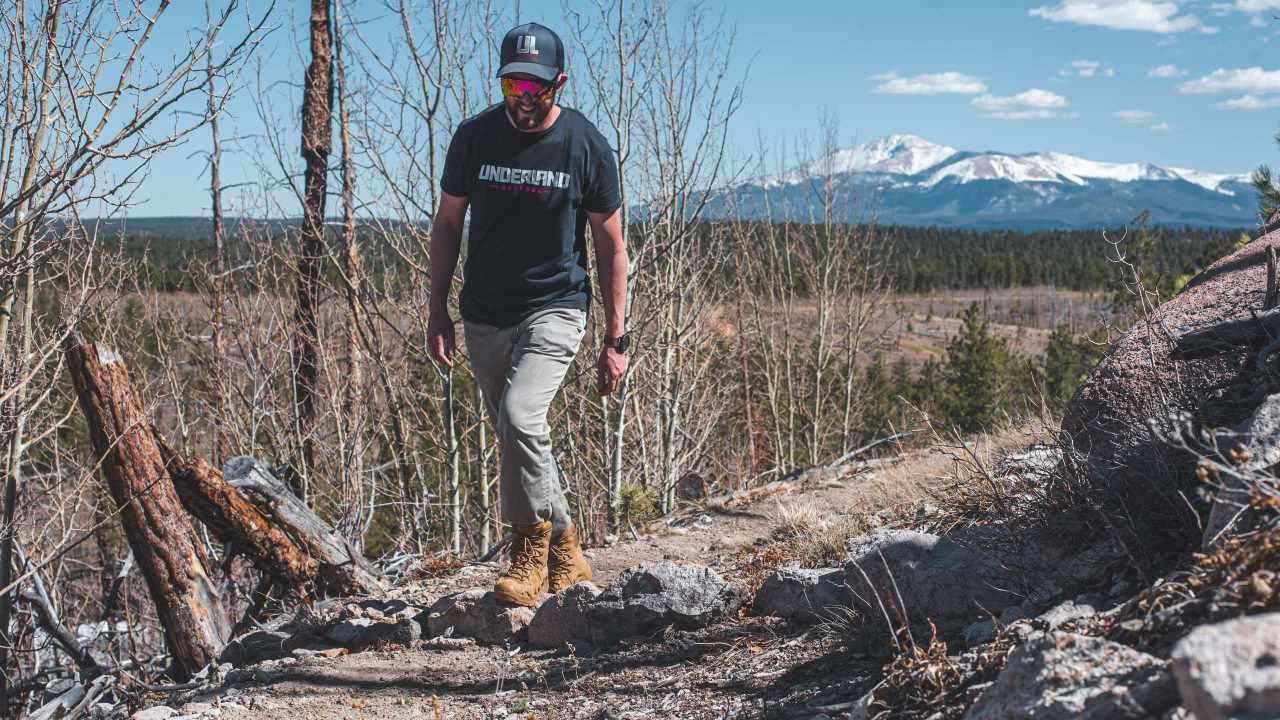
Warehouse picking, patrol work, site supervisors moving between buildings, long trail approaches. Impact cycles dominate. The heel takes a landing on every step, the forefoot takes the push-off, and a footbed that only feels soft will be flat by lunchtime. This is the group where a sole-internal rebound layer earns its place, because the work is done below the footbed.
The KS735 and KS737 are soft-toe waterproof tactical boots with PORON® XRD® and the same anti-fatigue build, intended for long walking rather than a fixed station. Where the site also requires an EH marking on hard industrial flooring, the AP860 is the relevant model.
Mixed, wet or uneven
Construction, mining and outdoor work rarely offer one surface. Concrete, wet tile, steel grating, gravel and mud can all turn up in a single shift. Here the comfort build is the last thing to specify. Get the toe cap, the slip marking, the membrane and the puncture resistance right first. Waterproof versus water-resistant, SRC markings and puncture-resistant midsoles each cover one of those decisions.
One practical note: a removable footbed lets a crew replace a compressed insole without replacing the boot, which is where the RC930 and the accessories range fit. It adds no sole layer, and it should not be specified as a substitute for one.
Fit comes before comfort
Any footbed reduces interior volume. A wide last usually has room; a snug toe box can push the toes against the cap, which turns an upgrade into a complaint within the hour. Check toe clearance with the insole fitted, not with the stock one. The size chart and the fitting guide are worth reading before a bulk order.
A trial that tells you something
Give one crew the boots for three full shifts, not a ten-minute walk around the office. Ask about the fourth hour and the end of the day rather than the first impression: the point of a slow-rebound build is that the initial feel is unremarkable and the difference appears later. Keep one person on the existing boot as a control. If nobody can tell the difference after three days, that specification is not doing anything for the site.
Before you place a trial order
Send the floor type, shift length, required protective markings and the crew’s fit profile, and we will build a mixed sample carton rather than send one model to everyone. Sample quantities and size breaks are arranged through the contact page.